Evidence of Testing, Critique, and Response
User testing and feedback formed an important part of the development process, supporting the refinement of the Bellomio brand identity. Initial design outcomes, including poster layouts, mascot applications, and packaging visuals, were presented to peers and tutors in order to gather constructive critique. This feedback provided valuable insight into how effectively the designs communicated visually and functioned as a cohesive brand system.
Early responses identified issues relating to visual hierarchy and composition, particularly where multiple elements such as the mascot, logo, and checkerboard pattern competed for attention. In some cases, the pattern was perceived as overly dominant, reducing the clarity of the overall design. In response to this feedback, adjustments were made to scale and placement, repositioning the pattern as a supporting element rather than a focal point. This significantly improved balance and readability across the compositions.
Further feedback highlighted the importance of logo visibility and consistency. Initial layouts occasionally reduced the prominence of the brand name due to competing visual elements. As a result, the logo was refined in terms of size, positioning, and contrast to ensure it remained clearly legible across all applications, including both 2D posters and 3D packaging renders.
The mascot design also benefited from user feedback. While the character was generally well received for its playful and approachable qualities, minor refinements were made to improve clarity and expression at different scales. This ensured that the mascot remained effective when applied to packaging, where space and visibility are more limited compared to larger format designs.
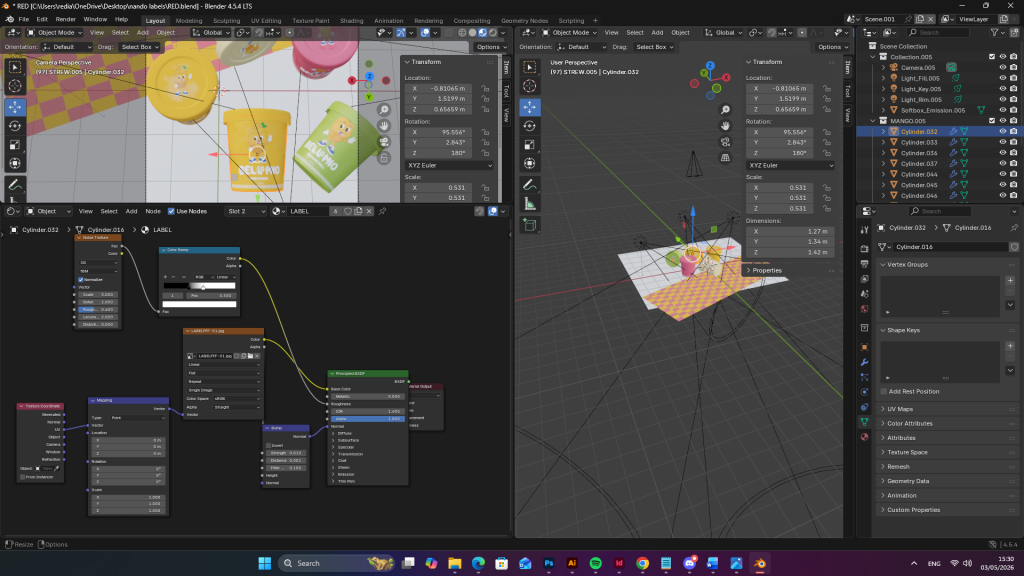
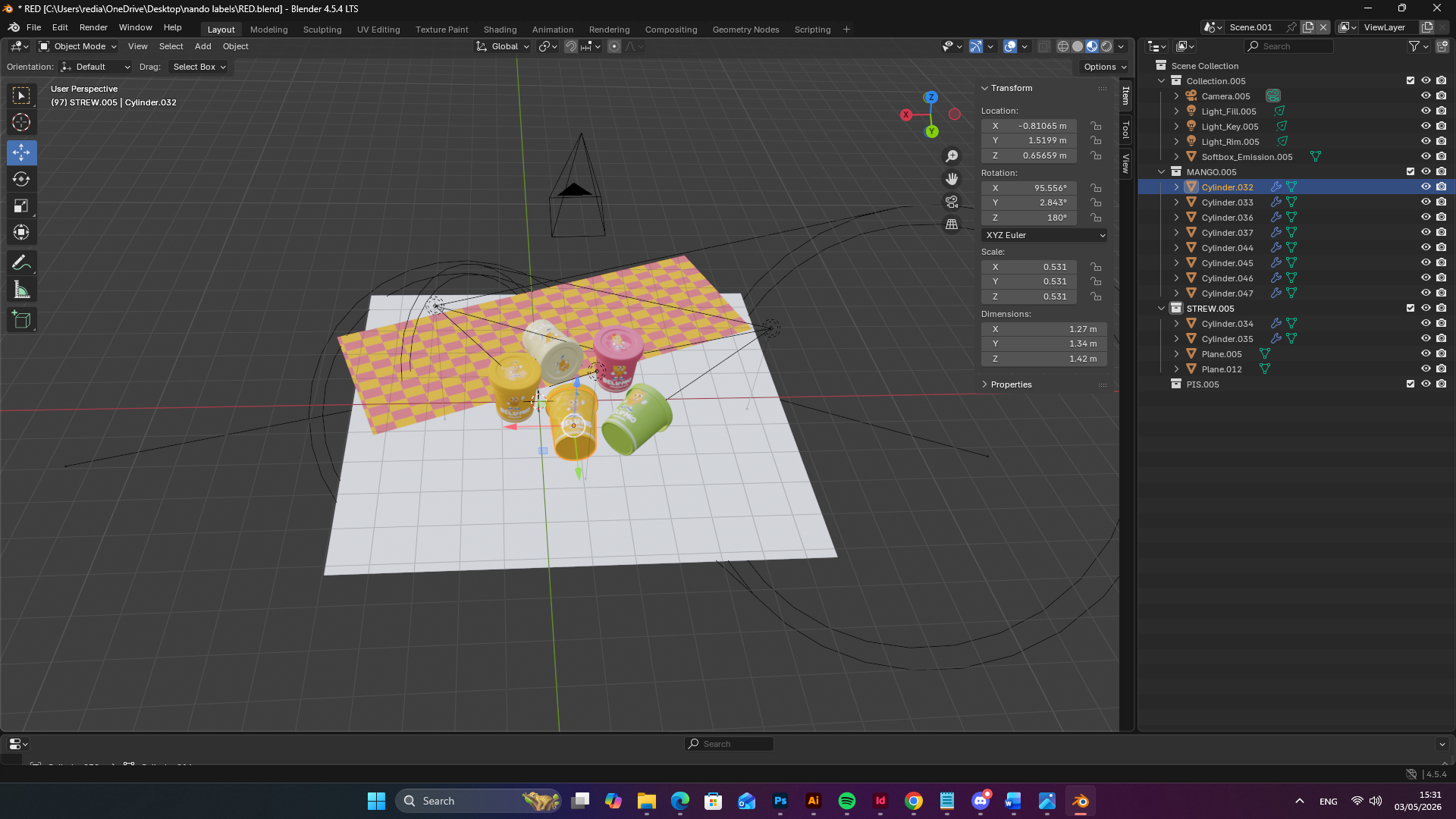
In addition, feedback on the 3D visualisations emphasised the need for improved realism in materials and lighting. Early renders appeared flat due to limited variation in surface properties and lighting intensity. In response, adjustments were made to material roughness, reflectivity, and lighting setup, resulting in more realistic and visually appealing outputs that better reflect contemporary product visualisation standards.
Overall, the incorporation of feedback demonstrates an iterative and reflective design process. The ability to critically engage with external critique and apply meaningful changes contributed to the development of a more resolved and effective final outcome. This process highlights an understanding of user-centred design principles and the importance of testing in achieving clarity, consistency, and visual impact.