
Design Laws you will apply to your final design
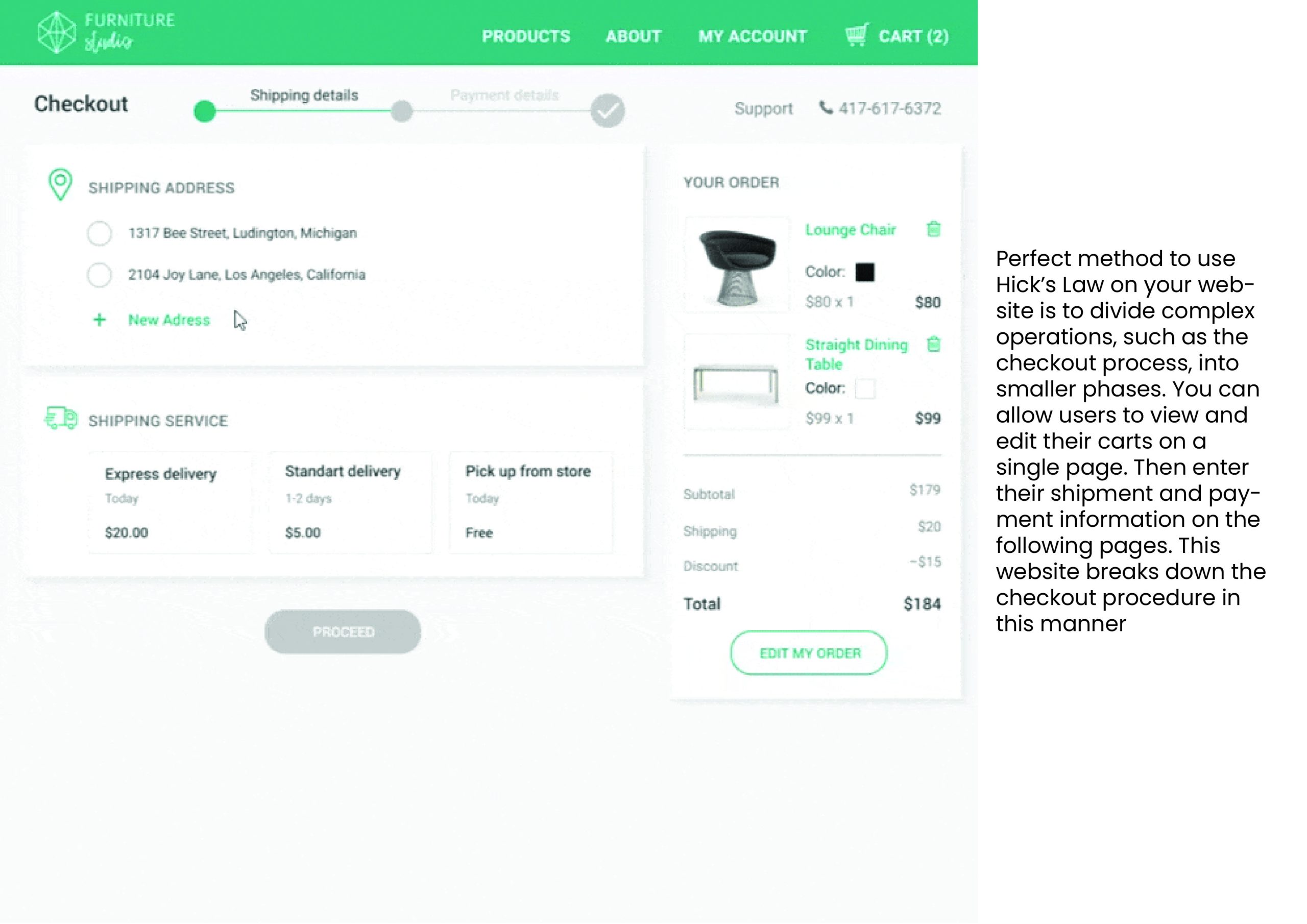
Hick’s law is a key design principle crucial in user experience design as it impacts various aspects of my work. A cluttered interface with ambiguous actions and hard-to-find information increases cognitive burden for users. Simplifying interfaces or procedures reduces mental strain, but contextual hints are vital to aid users in understanding available options and relevant information. It’s essential to remember that every user has a goal, whether it’s purchasing a product, seeking knowledge, or learning more about the content.
Basic examples Hick's law
Basic example of Jakob’s Law
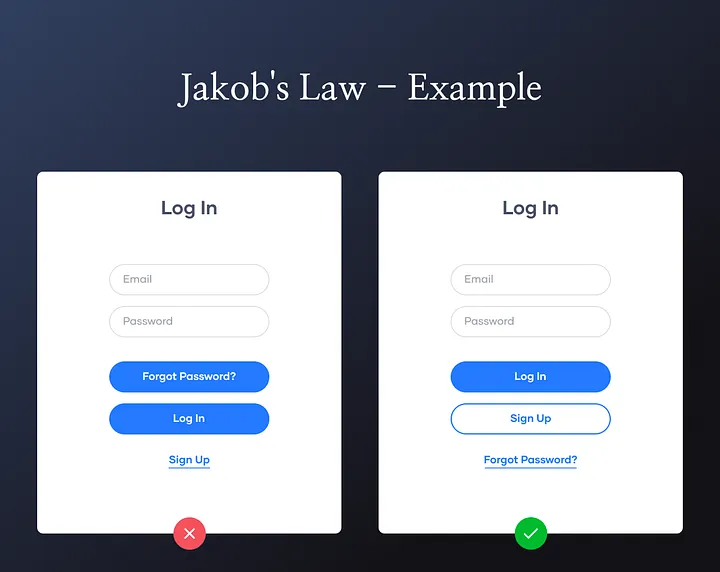
According to usability expert Jakob Nielsen’s theory, “Jakob’s Law,” consumers favor programs and websites that adhere to well-known patterns and conventions. Users bring past experiences and expectations from other interfaces, hence consistency and familiarity are prioritized in UI design. To improve usability and user happiness, designers should match interfaces to these mental models
Usability Goals Applied to User Interface Design
When designing the user interface for a reggae festival’s website or app, usability goals must be prioritized to ensure visitors have an enjoyable and memorable experience with minimal effort. This involves optimizing hand and eye movements by strategically placing relevant screen elements to draw users’ attention as needed. Navigation paths should be short and consistent, avoiding frequent switches between mouse and keyboard inputs. Visibility principles should guide the design, making key elements readily apparent and accessible. Consistency is crucial, ensuring that every component behaves similarly across the interface. Simplicity enhances user experience by prioritizing common functions, setting defaults, and maintaining a clutter-free layout. Predictability fosters user engagement by ensuring users know what to expect during interactions, particularly when purchasing event tickets. Providing feedback, both positive and negative, helps users navigate the interface and track their progress towards their goals. By adhering to these principles, the website or app design becomes intuitive, efficient, and user-friendly, ultimately enhancing the overall festival experience for attendees.
Call To Action
A prompt or instruction intended to persuade a user to perform a certain action is known as a Call to Action (CTA). CTAs can be used on a Reggae Festival website or mobile app to direct consumers towards actions that increase their interaction with the event. Throughout the Reggae website and app, calls to action will be used to point people towards the most important information, including ways to purchase tickets, sign up for the newsletter, volunteer or sponsor opportunities, and other noteworthy activities.
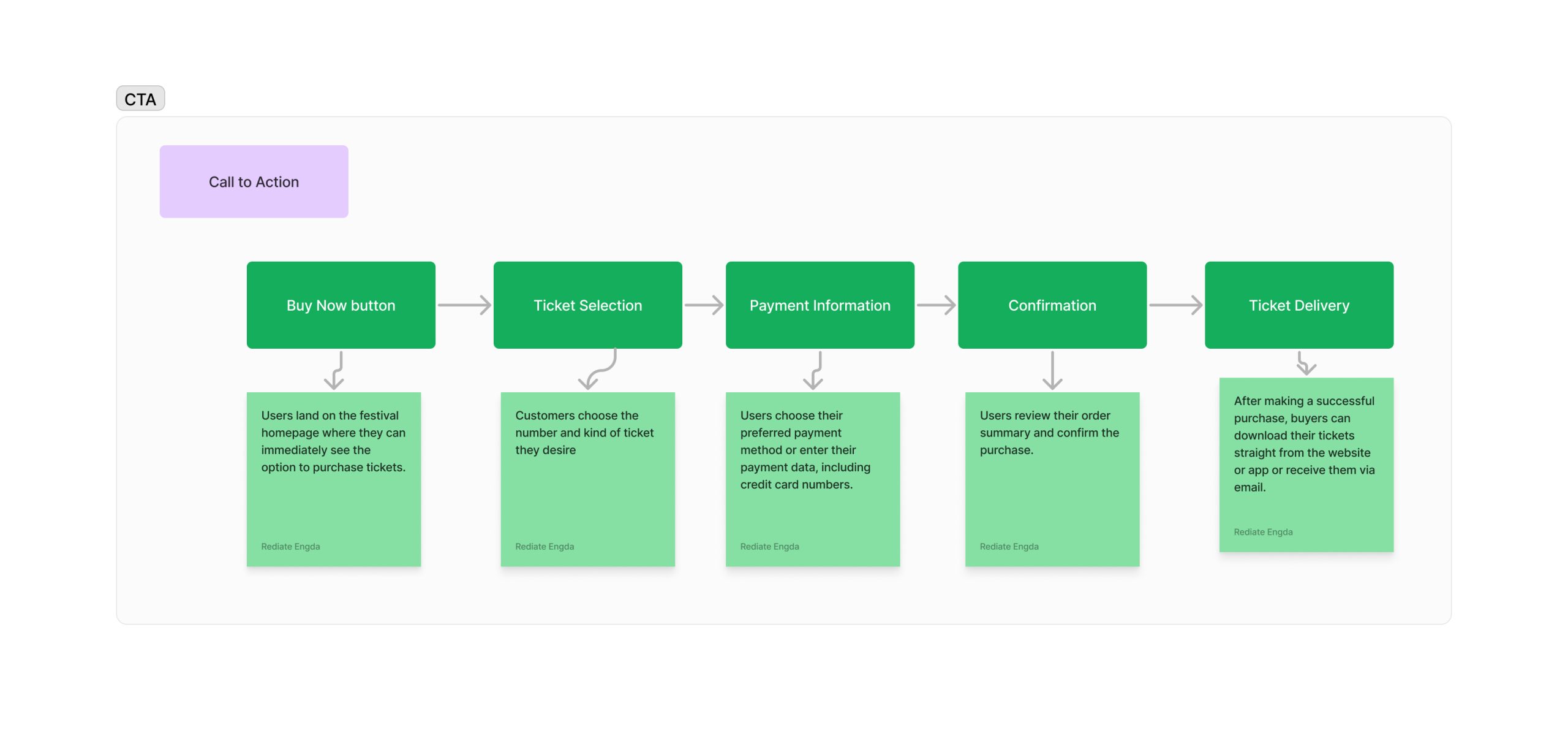
Stakeholder Interface Differences
It’s critical to consider the unique requirements and duties of each stakeholder while creating interfaces for a reggae festival. Organisers would prioritise managing various components including as scheduling, artist reservations, ticket sales, vendor management, and logistics. Features like a timetable, stage logistics, technical specifications, and promotional materials would be necessary for artists and performers. Interfaces that make tasks like scheduling shifts, gaining access to training materials, and corresponding with organisers easier for volunteers would be beneficial. The elements that allow attendees to browse the line up, buy tickets, arrange their itinerary, access maps, and find food and goods sellers would be the features they prioritise. All parties involved in the festival can have an optimal experience by customising interfaces to meet their needs.
References
Babich, N. (2022). Using Hick’s Law in Product Design. [online] Medium. Available at: https://uxplanet.org/using-hicks-law-in-product-design-a61e96fbf507 [Accessed 18 Feb. 2024].
. Csincsak (olively.io), F. (2023). Unlocking User Experience Using Jakob’s Law. [online] Medium. Available at: https://medium.com/@fannicsincsak/unlocking-user-experience-using-jakobs-law-b37de44d1638 [Accessed 4 Mar. 2024].
Yablonski, J., 2024. Laws of UX. ” O’Reilly Media, Inc.”.
- Yablonski, J. (2022). Hick’s Law. [online] Laws of UX. Available at: https://lawsofux.com/hicks-law/
- Yablonski, J. (2022b). Jakob’s Law. [online] Laws of UX. Available at: https://lawsofux.com/jakobs-law/.