
Conceptual design is the foundation for developing the core idea behind a project and outlining how that idea will be communicated visually. (Levanier, 2021)
I decided to base my animation on the theme “Go Digital and Stop Cutting Trees.” This subject combines both sustainability and ethical issues—important topics that I believe my audience should be more aware of. Through this project, I wanted to teach myself and others about the consequences of cutting trees, especially how something as simple as printing on paper can contribute to environmental harm.
.
Initial Animation Design Planning
To begin preparing for the initial animation design, I made a list of words and objects that I believed were strongly associated with my message. These words helped shape my visual direction and conceptual development. The most important word was “trees,” as they are central to the issue. Other words included: cutting machine (representing the problem), grass and green environment (symbolizing nature), building (as a symbol of modern industrialization), printer, table, paper, ink, and recycle bin (as a visual reminder to reuse and reduce waste).
Using these words and themes, I began to develop a storyboard that surrounded my initial thoughts and ideas. I asked myself: What is the danger? What are the consequences? From there, I crafted a visual narrative that would make these issues easy to understand, even without dialogue. This process helped me turn abstract concerns into a concrete animation that reflects the impact of daily habits and encourages small, positive changes through digital alternatives.
Development of storyboard
My initial animation design planning helps me decide which visual elements and design ideas are most relevant to my project. Since I’m not someone who usually starts by drawing on paper, I often begin by searching for reference images online that relate to my theme. This process allows me to gather visual inspiration and helps shape the direction of my animation.
Before jumping into any detailed digital drawing, I download reference-based images from the internet and use them to create rough sketches that guide my storyboard. I believe that developing a storyboard is one of the most important steps in the creative process—it helps me organize my ideas visually and plan how the animation will flow from one scene to another.
Instead of drawing traditionally, I create my storyboard using digital tools and rough illustrations. This method works best for me, allowing me to translate my concepts into visual form without being limited by my hand-drawing skills. The storyboard becomes my visual map, guiding me before I move on to the detailed design stage.
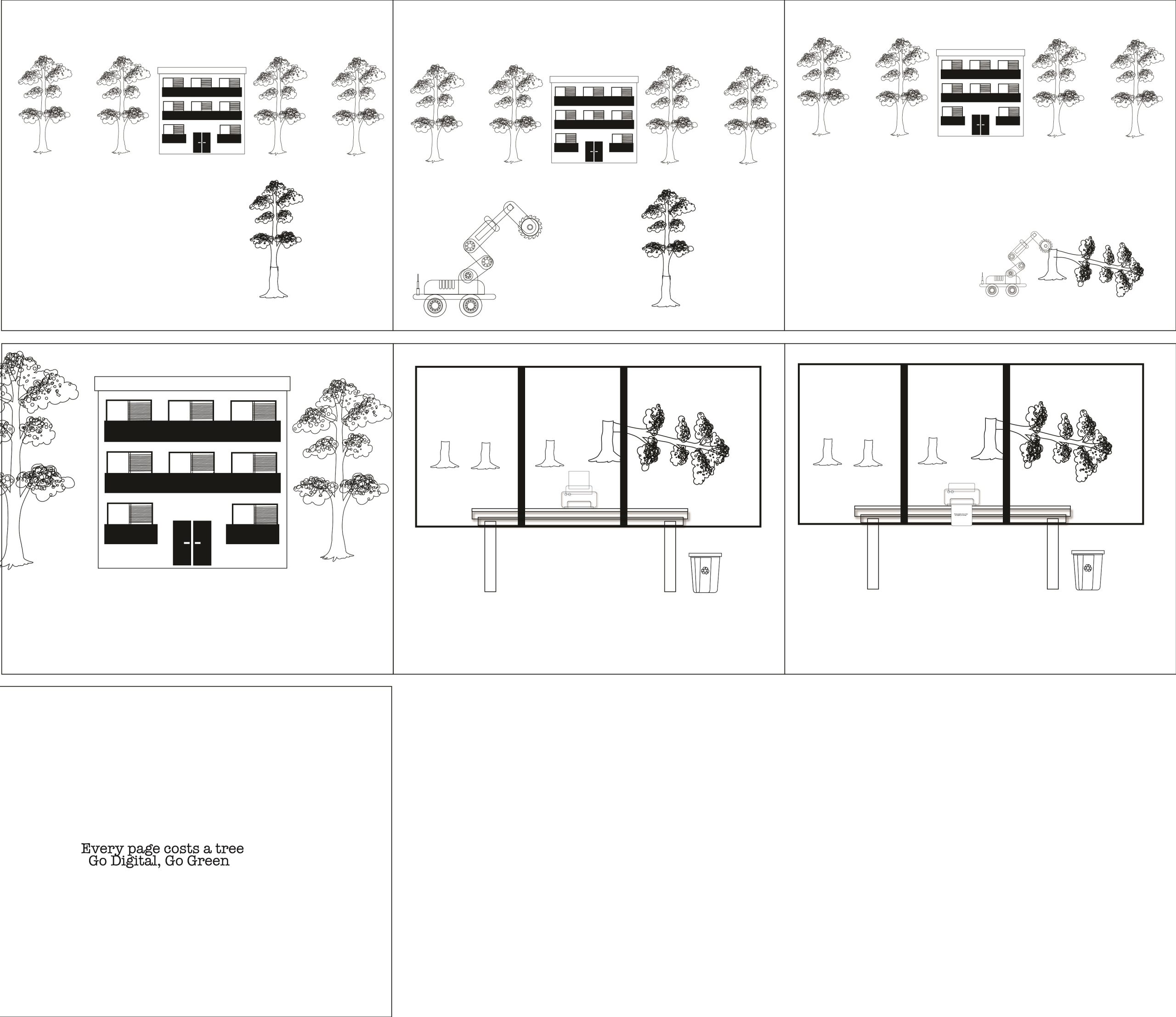
The storyboard above outlines the conceptual transition plan for my animation titled “Go Digital.” These initial keyframes map the visual journey from environmental harmony to the consequences of human consumption, particularly through excessive paper use. The animation begins with a serene forest surrounding a modern building—this peaceful coexistence represents the balance between nature and development. As the story progresses, the introduction of a tree-cutting machine subtly shifts the tone, symbolizing the quiet but persistent destruction of natural resources.
The second scene transitions into the interior of the building, focusing on a simple office setup with a printer and a bin beneath the table. The view outside the office now reveals tree stumps, tying the act of printing directly to deforestation. These keyframes allow me to clearly communicate the message and structure before moving into detailed digital production. Tweening will be used later in the process to smoothly connect the transitions between these frames.
An impactful moment occurs when the printer produces a single sheet of paper that delivers the message:
“Every page costs a tree”
“Go Digital, Go Green”
The camera zooms in to stress the importance of digital responsibility. Another conceptual layer is added when the recycling bin becomes visible beneath the desk—this element quietly reinforces the idea that even small actions, like recycling, play a role in protecting the environment.
These scenes will be further developed through digital animation, but their foundation in the storyboard is essential. They offer not only a visual roadmap but also space for emotional and symbolic storytelling. The final frame, a simple yet powerful call to action, ensures that viewers are left with a resonant message to adopt more sustainable habits
Reference
- Levanier, J. (2021). What is conceptual design? And how to wrap your mind around ideation. [online] 99designs. Available at: https://99designs.com/blog/tips/conceptual-design/.