
Project goals
The project goals for the Welcome House website were all about creating a user-friendly, accessible, and visually appealing platform that truly aligns with the organization’s mission and supports its services. My main objective was to build a site that informs and educates visitors by providing clear, detailed information about Welcome House’s mission, programs, and resources. This includes essential sections like how you can help and Featured Campaigns to engage the community and share opportunities for involvement.
One of my primary goals was to ensure that the website encourages community involvement by making it simple for users to volunteer and make secure one-time or monthly donations. I made sure the website complied with WCAG guidelines and was responsive on all devices because accessibility and usability were very important to me. This implies that users would have an ideal viewing experience that is simple to use and navigate whether they are on a tablet, smartphone, or desktop monitor.
I also wanted to include a multilingual feature to make the site accessible to a broader audience, reflecting Welcome House’s commitment to inclusivity and reaching diverse communities. It was important for me to create a safe and welcoming digital space where users feel comfortable accessing the support they need. I saw the site as a bridge that connects individuals with Welcome House’s services and fosters a sense of belonging.
Consistency in branding was key for me throughout the project. I made sure to incorporate the organization’s colours, logo, and tone of voice to maintain a cohesive and professional look. Lastly, I prioritized optimizing the site for fast load times to minimize its environmental impact. My aim with these goals was to enhance the user experience, increase community engagement, and represent the mission and values of Welcome House in the best way possible.
Initial Planning Phase
The initial planning phase for the Welcome House website and branding was such an exciting and important step for me in setting a strong foundation for the entire project. During this stage, I focused on research, creativity, and structured design to make sure that the visuals, functionality, and overall messaging aligned perfectly with Welcome House’s mission of providing support, compassion, and community to those in need. I wanted everything to feel intentional and meaningful. This process involved several key steps, where I put my ideas together and set the tone for a cohesive and effective final product.
I started the process by thoroughly researching Welcome House’s mission and beliefs. I wanted to fully comprehend the organization’s values and encapsulate the spirit of inclusivity, community, and care. My objective was to convert these significant attributes into visually appealing and functional design components that are appealing to users and capture the essence of Welcome House’s mission. This step was inspiring and intimate since it laid the groundwork for producing something genuine and powerful.
1.Inspirational logos
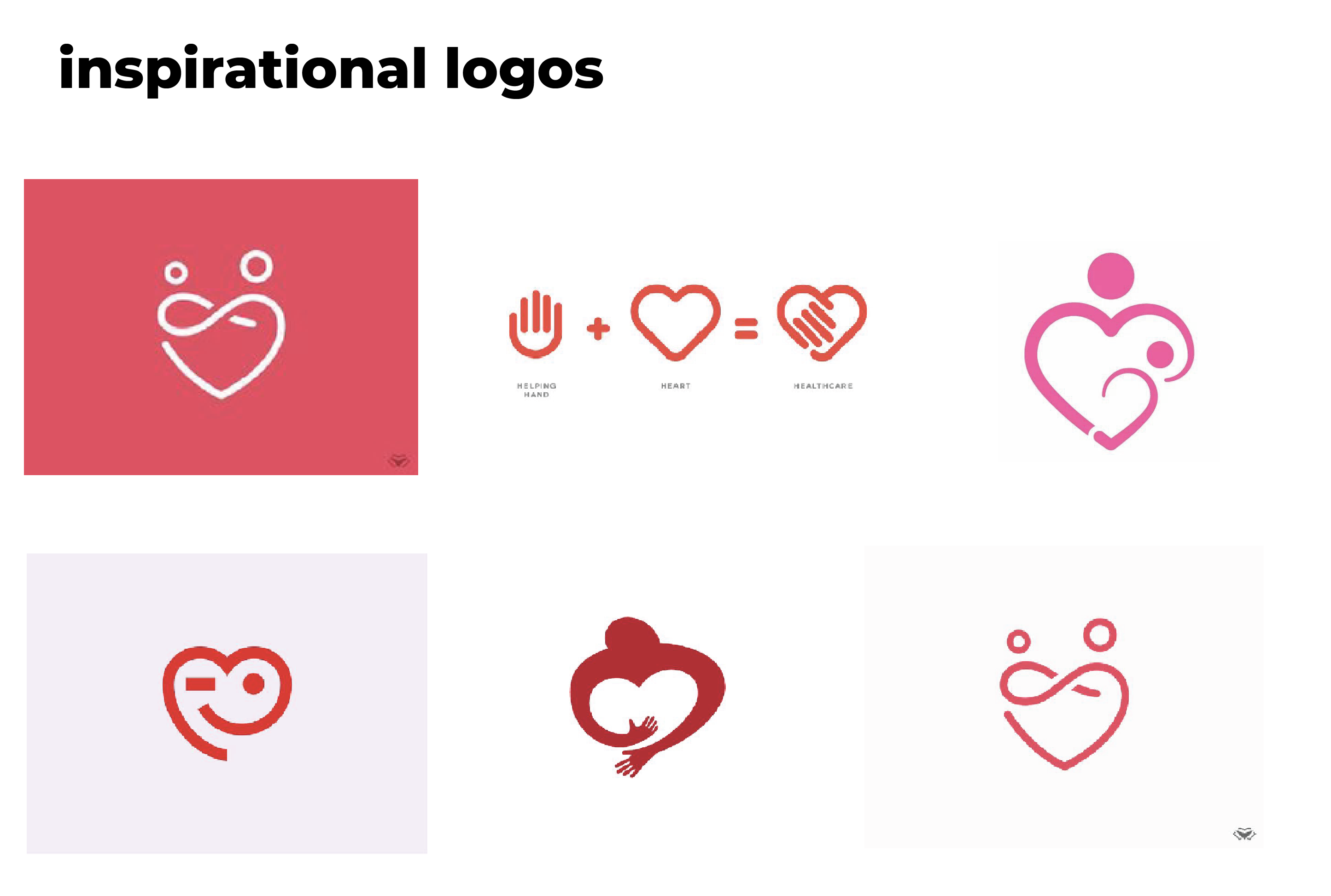
My first step was to gather and list elements that truly resonated with the concept of Welcome House before I even started sketching the logo. I knew that the heart icon or shape would be a central piece, as it symbolises warmth, compassion, and community qualities that are at the heart of Welcome House’s mission. I was drawn to the fact that the original Welcome House logo combines a heart and a house roof, so I decided that this combination would be essential to build upon. To expand my understanding of how to play with icon shapes in logo design, I spent time researching and found a range of inspiring images on Pinterest. These visuals were a game changer for me, sparking ideas and showing how designers creatively merge different forms. This exploration not only pushed me to experiment with heart shapes but also inspired me to integrate human figures, capturing the welcoming, community focused nature of Welcome House.
2. Sketching logo
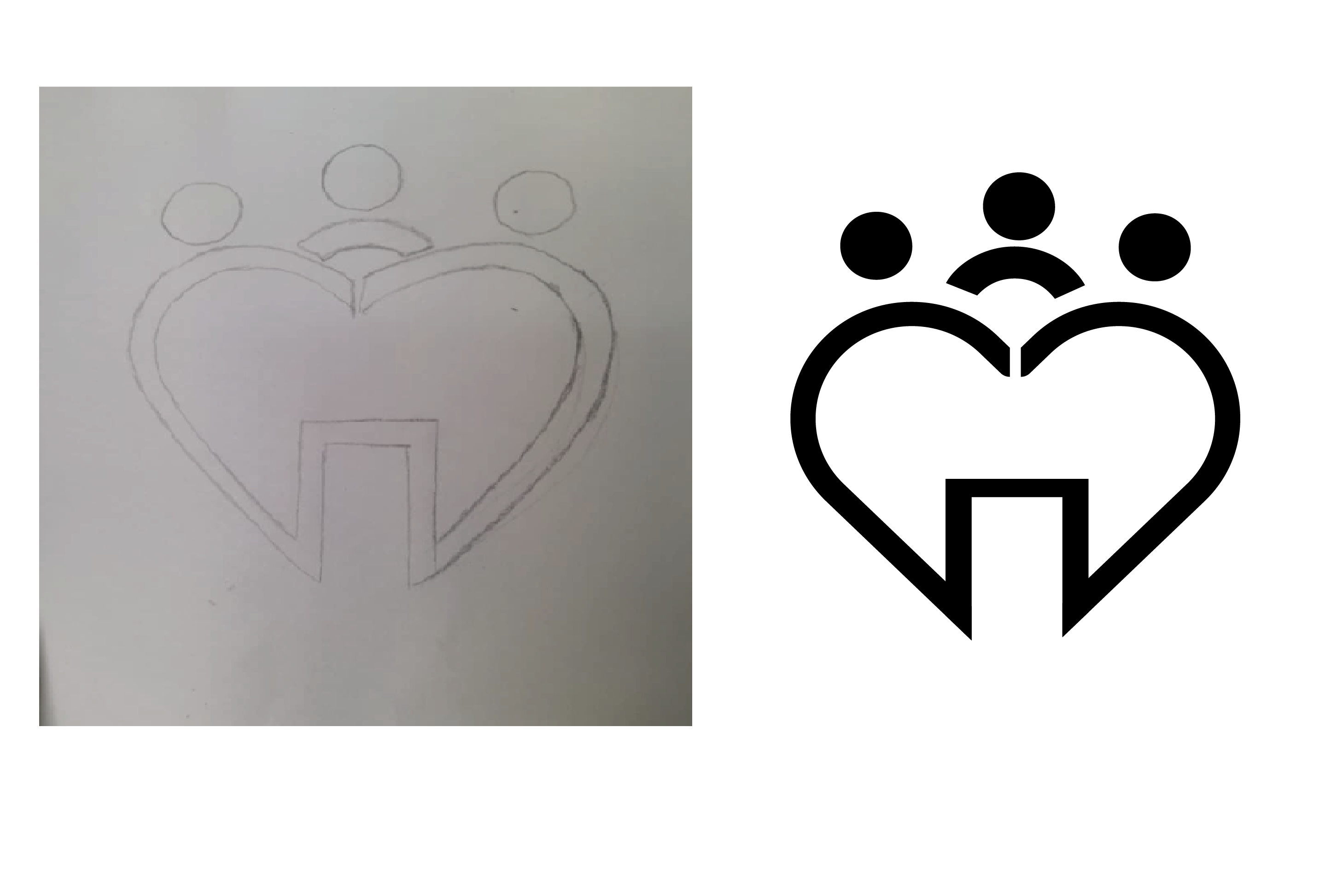
This is my second stage, which consists of developing the Welcome House logo by drawing. Even though I could improve at sketching with a pencil and paper, I thought that this step was crucial for trying out several concepts before moving on to digital design. I began by making the heart form the main emphasis of the logo, drawing inspiration from my mood board. The heart icon, in my opinion, represents love, kindness, and concern values that are entirely consistent with Welcome House’s objective of helping those in need and establishing a secure atmosphere for them. It was crucial for me to convey the compassion and warmth that guide the organisation’s operations.
Next, I added a house or gate shape to the design. In my mind, the gate represents a welcoming entry point, signifying access, safety, and support. I wanted it to feel like an invitation, encouraging individuals to step into a space that embodies comfort and security. The gate also represents a transition from hardship to stability, which reinforces the welcoming and protective nature of Welcome House.
Lastly, I used a people figure to highlight inclusivity, community, and connection. Because it emphasises that Welcome House is focused on individuals and families, I found this feature to be significant. People congregate there, exchange stories, and offer mutual support. The people figure fosters a sense of solidarity and belonging by symbolising the organization’s core constituency, the people it serves. I believe that the final logo I created by fusing the heart, gate, and people figure perfectly captures the spirit of Welcome House a haven of safety, warmth, and unity.
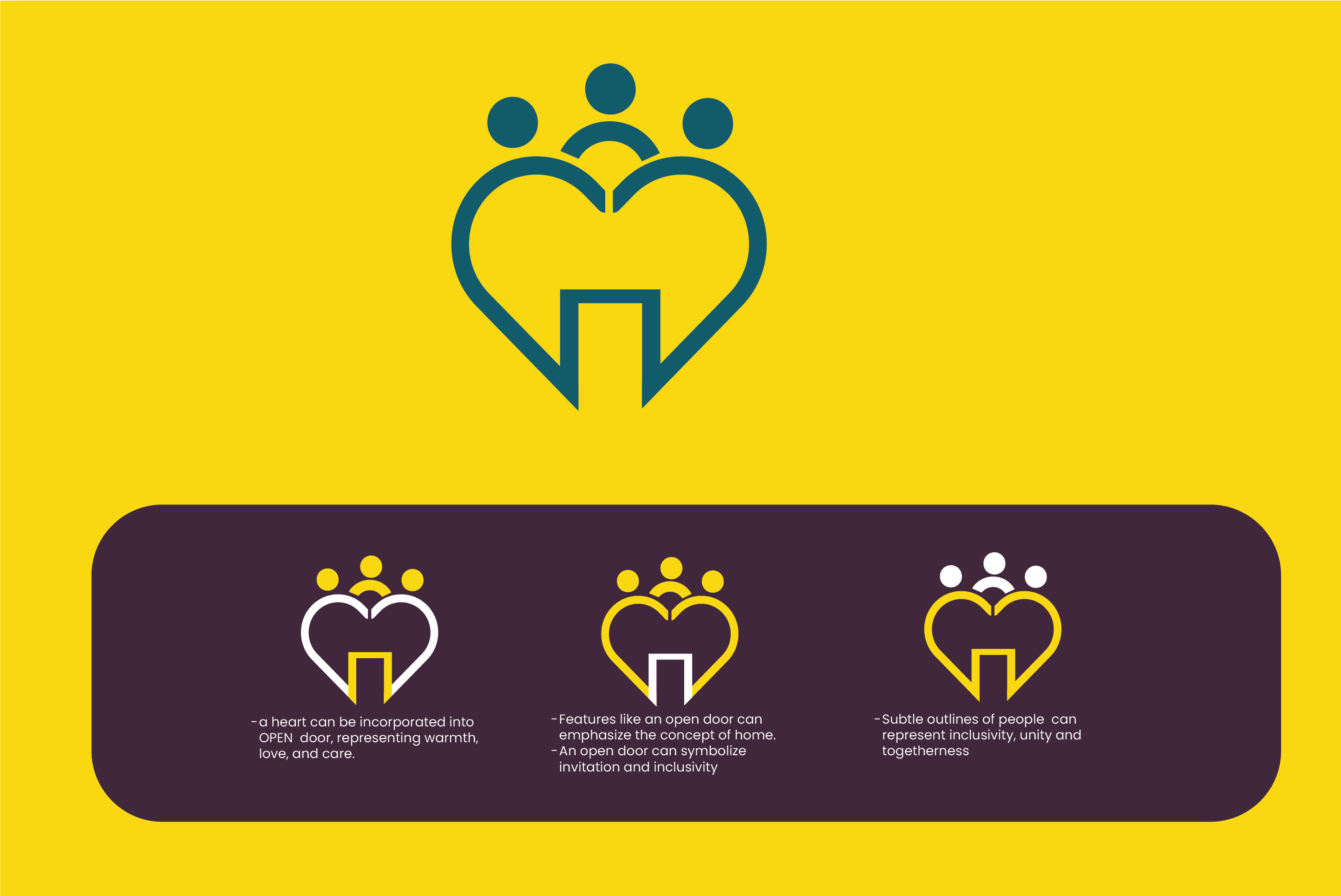
This is the final logo for Welcome House, which I carefully designed by combining all the key elements I had explored. To make the message more impactful and clear, I decided to highlight the heart, gate, and people figure using white colour. This way, each element stands out and communicates its meaning more effectively to the audience. I wanted the logo to be simple yet powerful, making sure that every part of it speaks to Welcome House’s mission of warmth, support, and community.
3. Desktop-First Design for Welcome House
I started my first sketches using the Welcome House website’s Desktop-First Design methodology. This method puts more emphasis on developing a thorough layout that is suited for larger screens before modifying it for smaller screens. In order to successfully assist users, the desktop-first design guarantees a solid visual hierarchy with important information prominently presented. The design’s initial emphasis on desktops creates the framework for a unified, responsive website that prioritises usability, accessibility, and engagement.
While initially optimized for desktops, the design uses flexible grids and scalable elements to ensure seamless adaptation to tablets and mobile devices. This guarantees that all users, regardless of their device, can access a user-friendly and visually appealing website.