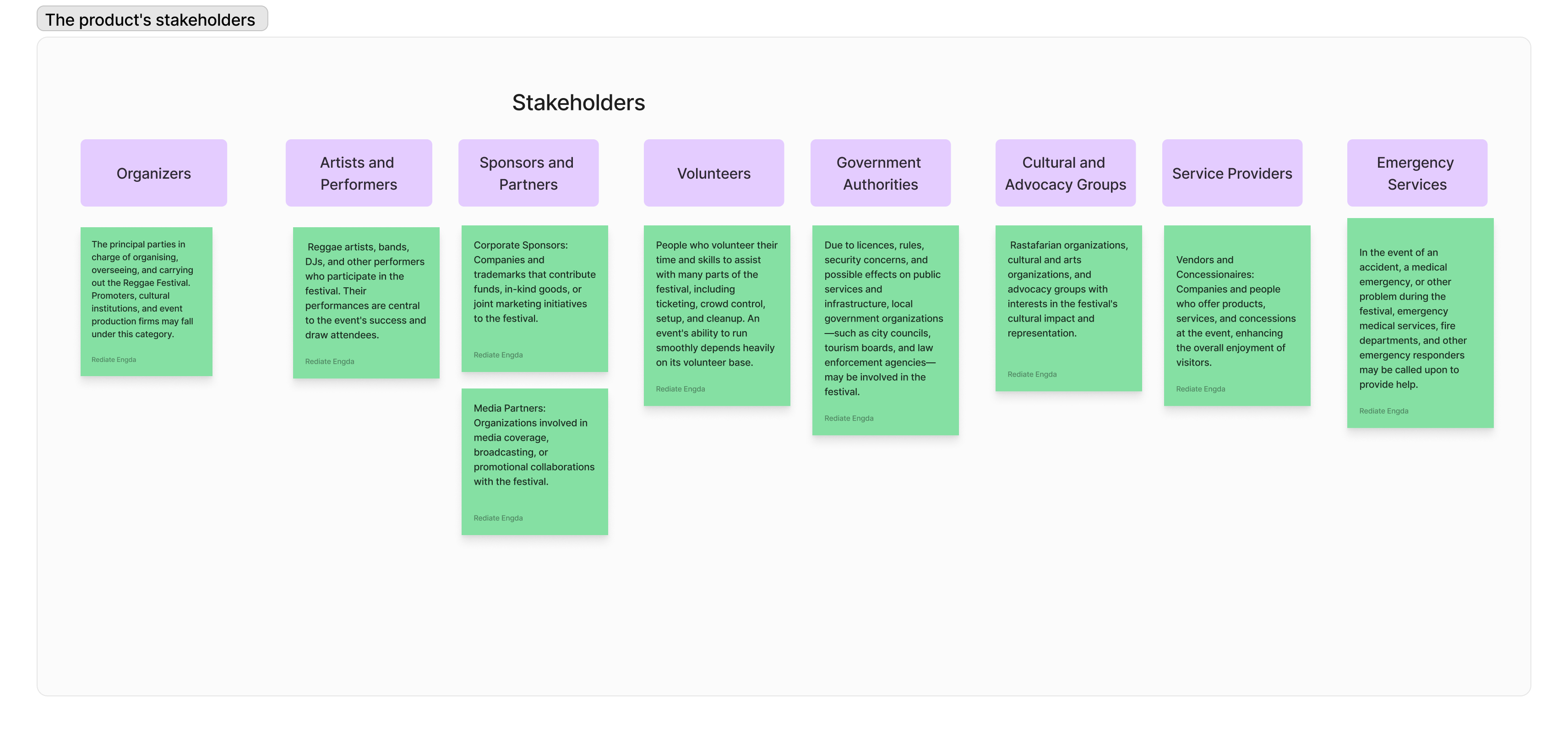
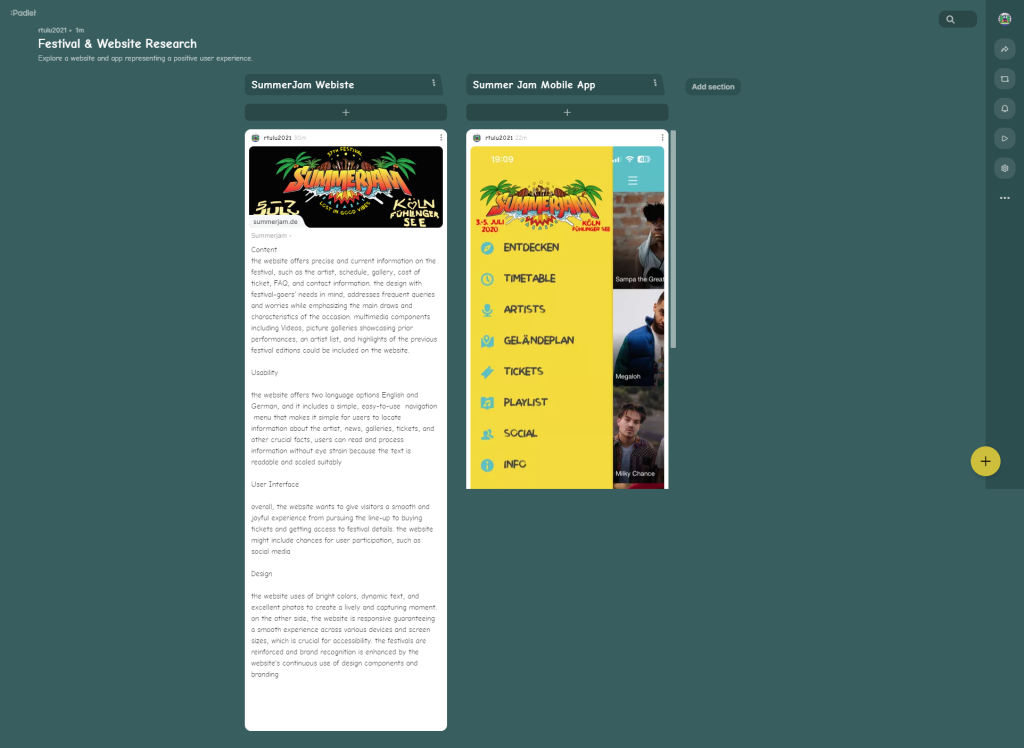
Rastafarian culture, reggae music, and the associated lifestyle are the main draws for attendees at Rasta Festivals; these people are usually between the ages of 18 and 39. People from many backgrounds who enjoy reggae music, Afrocentric culture, Rastafarian principles, and the advocacy of peace, love, and harmony may make up this audience. Reggae music enthusiasts, such as those who enjoy dub, roots reggae, and similar genres; supporters of social justice, equality, and the media, volunteers, artists, policing personnel, and event workers make up the secondary target audience. Information about the festival will be slightly different for both audiences.
In both internal and external categories, stakeholders have different expectations for the reggae festival website and mobile app. Organizers strive for a seamless experience to promote ticket sales and information retrieval, and they internally prioritise higher user engagement, downloads, and active sessions. The platform’s prominent scheduling and profile elements are expected to effectively engage fans and market the artists’ performances. Outside of the event, attendees look for a user-friendly website that offers interactive maps, real-time information, artist biographies, schedules, and ways to buy tickets. In order to help them fulfil their duties and make a positive impact on the festival, volunteers expect effective planning, tracking, and communication.
Assumptions and success of the festival
The festival is designed to cultivate an inclusive and vibrant atmosphere that celebrates the rich tapestry of music culture while fostering meaningful connections among attendees. Through interactive installations, captivating art exhibits, and engaging community initiatives, the festival aims to create memorable experiences that transcend the boundaries of music genres.
My designs’ success would be determined by a number of important factors. First and foremost, it is critical to provide accessibility for all users, including those with impairments. Success in this area would be demonstrated by meeting or exceeding accessibility criteria and getting favourable feedback from people with a variety of needs.
Successful designs would also result in higher user retention and engagement. Metrics like the amount of time spent on the platform, the frequency of visits, and the conversion rates for important actions could be used to gauge this.
Accessibility concerns
Accessibility ensures everyone, regardless of abilities, can engage with web content. It removes barriers to full participation in the digital world, aligning with the web’s vision of sharing information and connecting people. (Power et al., 2012)
For a website to be accessible, clarity is essential. Readability is aided by giving keyboard navigation and enough colour contrast top priority. Users with vision impairments benefit from text and zoom modifications. The user experience is improved with clear error messages. Usability and inclusivity are promoted when accessibility is incorporated into UI design. A clear, navigable interface is created by embracing keyboard navigation, colour contrast, font modifications, and unambiguous error warnings, guaranteeing equitable access for all.
The product's users, User journey maps and persona
The Product Users
The reggae festival must make sure that attendees’ fundamental requirements are satisfied by providing basic amenities like a variety of food and drink options, restrooms, trash cans, appropriate camping spaces, and easily available maps. Attendees should have access to helpful staff and thorough guides at all times during the event. Within the festival, people who come and interact with its different experiences and services are often called “product users.” All attendees can have a comfortable and joyful experience at the event if their fundamental requirements are met and their happiness is given priority.
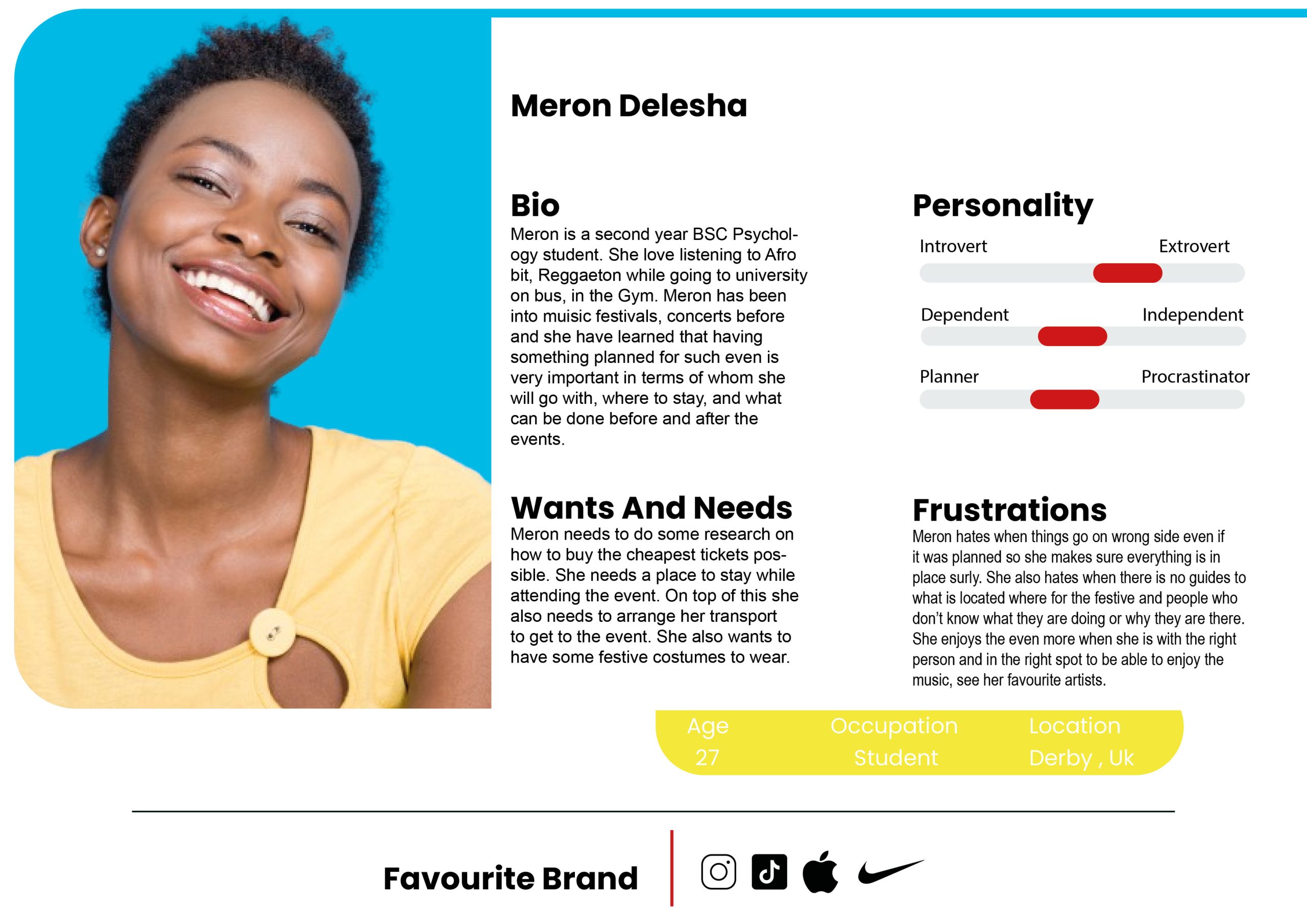
Persona 1 – Meron Delesha, Student
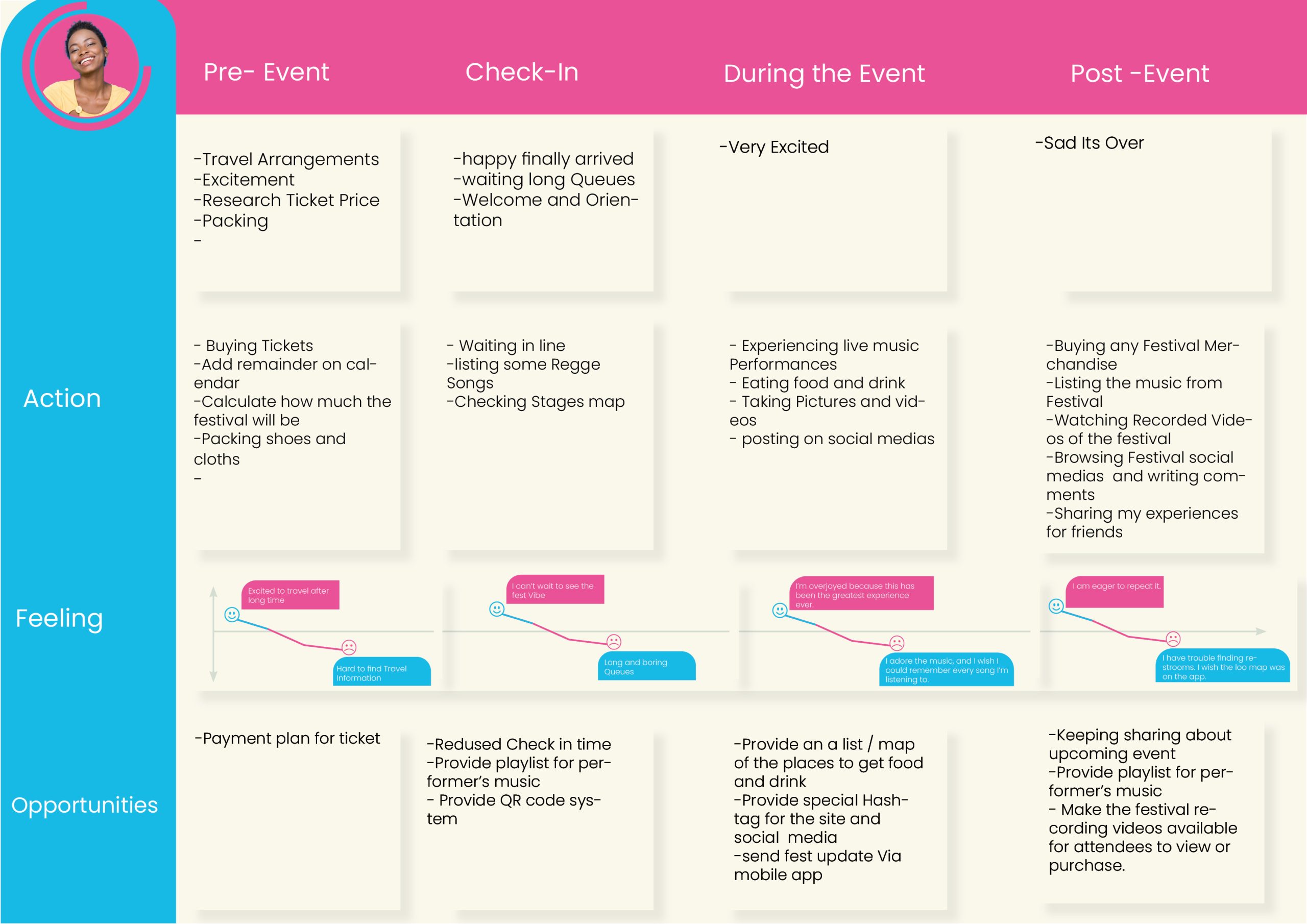
User Journey Map 1 – Meron Delsha, Student
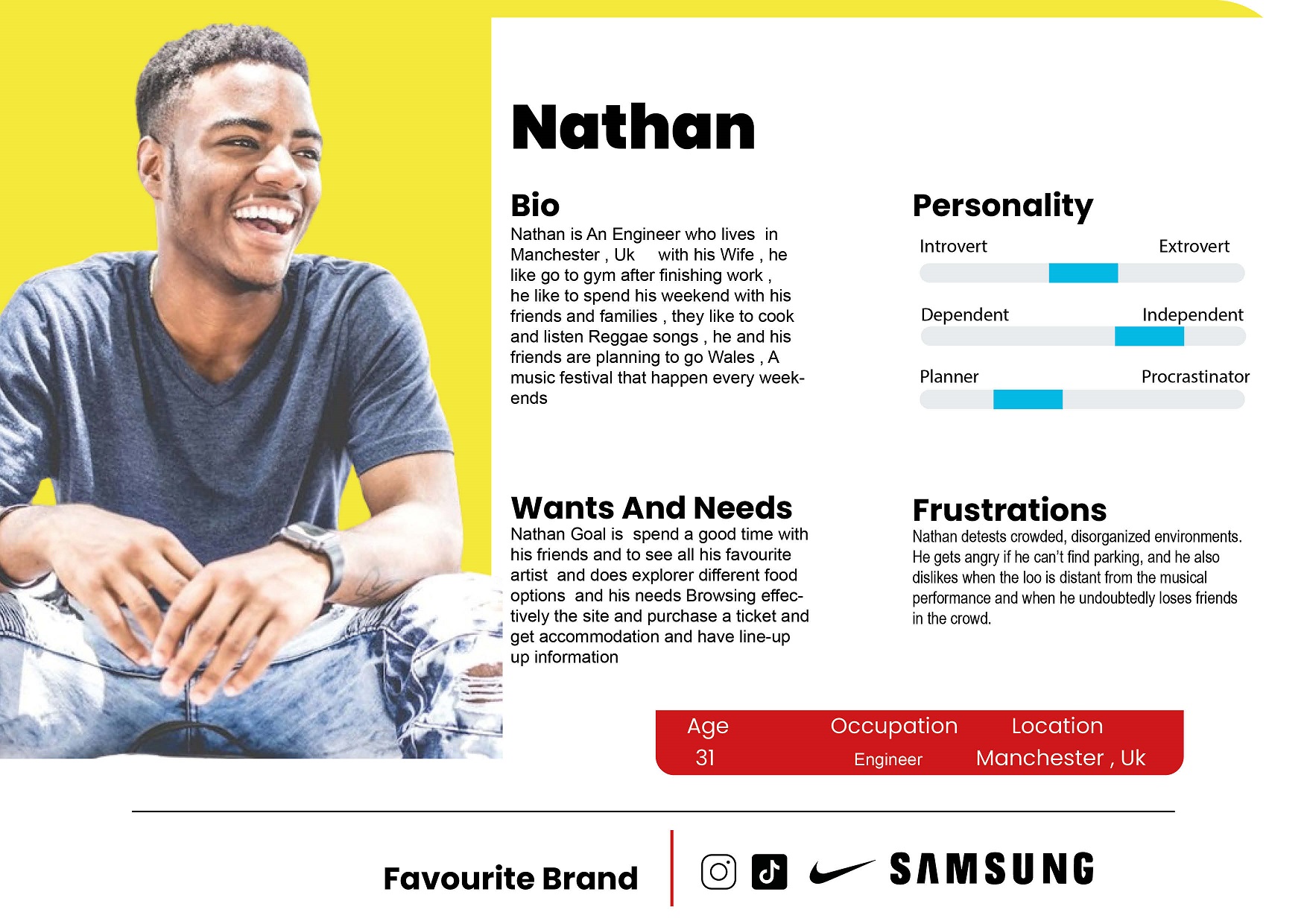
Persona 2 – Nathan, Engineer
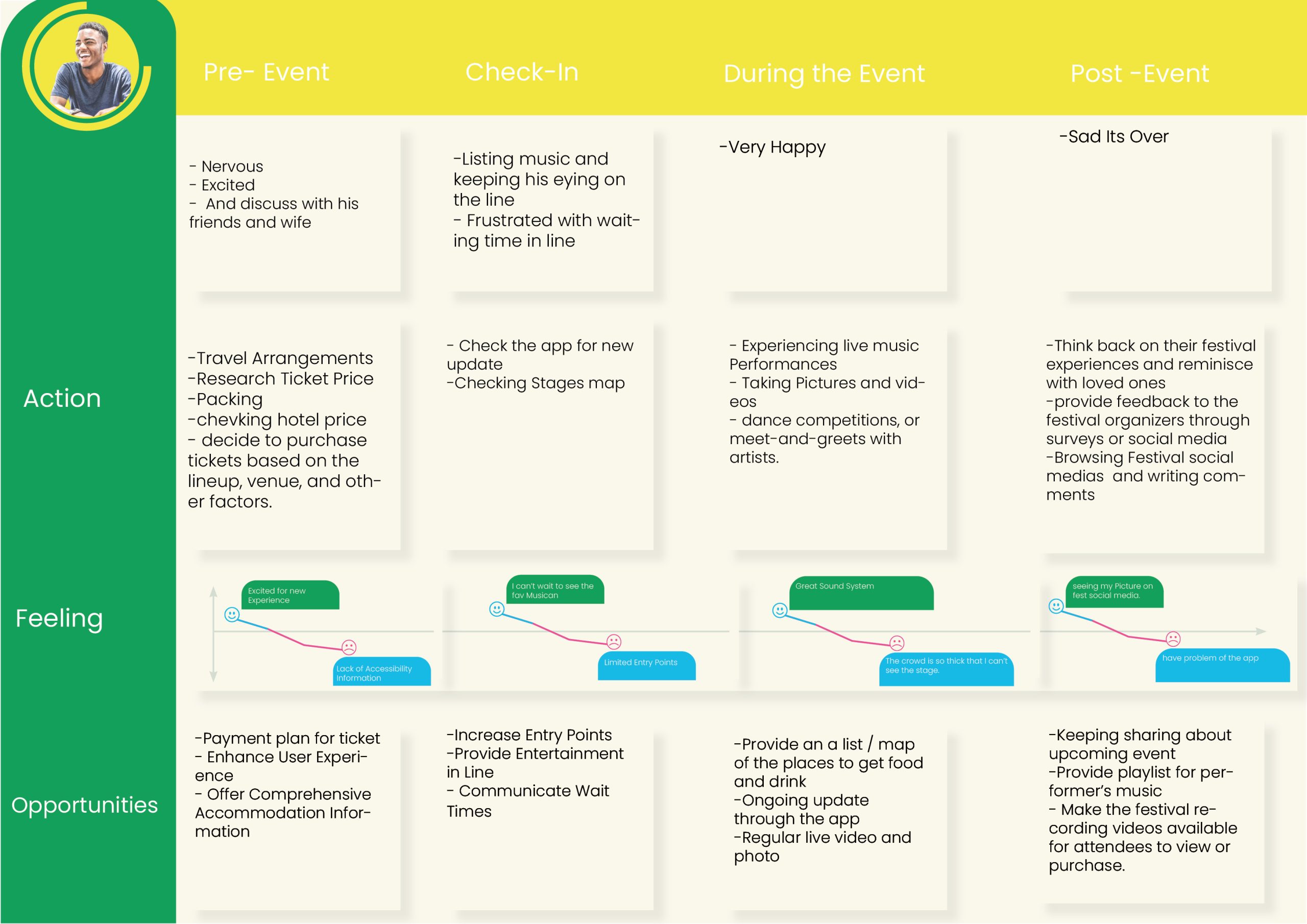
User Journey Map 2 – Nathan, Engineer
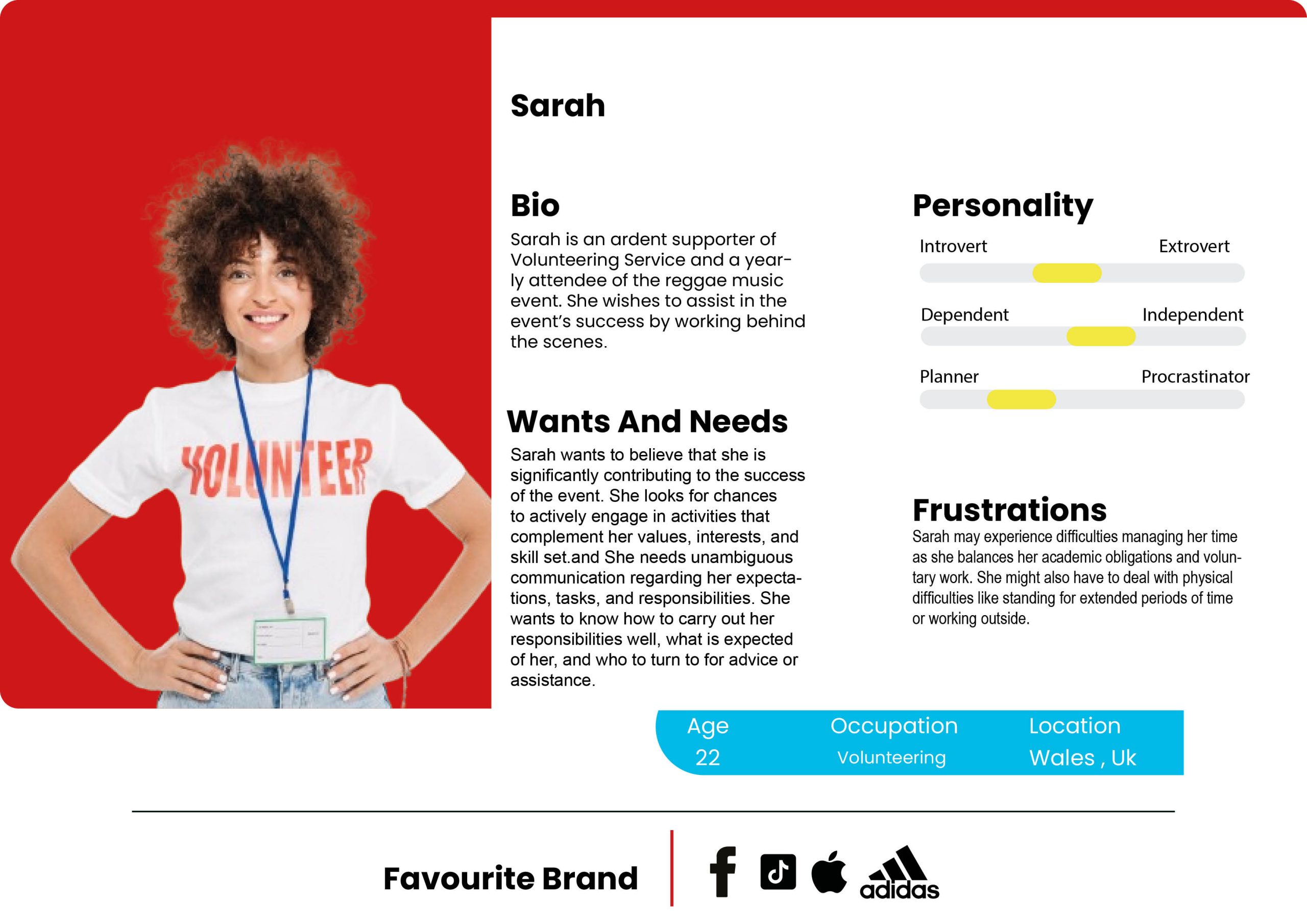
Persona 3 – Sarah, Volunteering
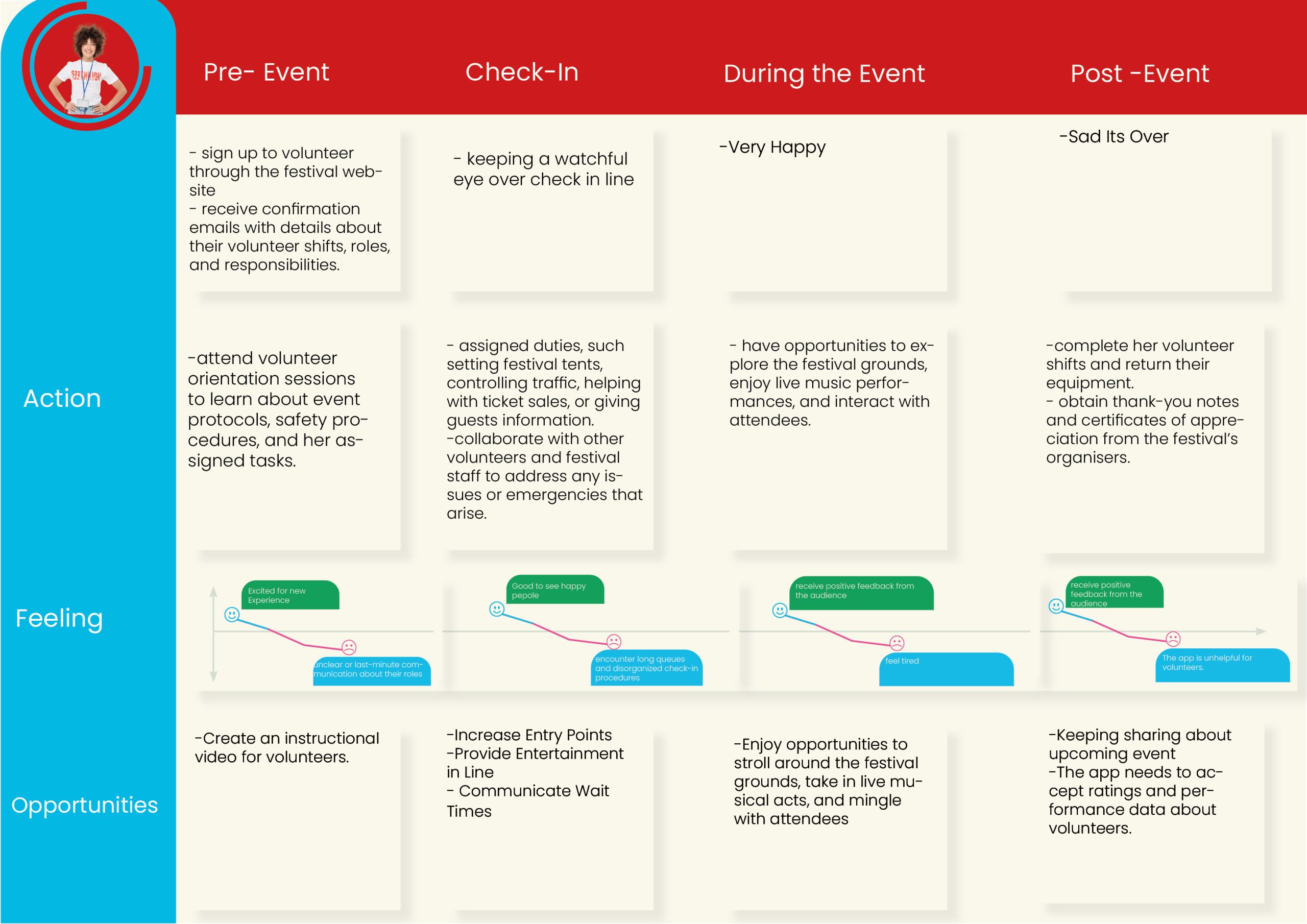
User Journey Map 3 – Sarah, Volunteering
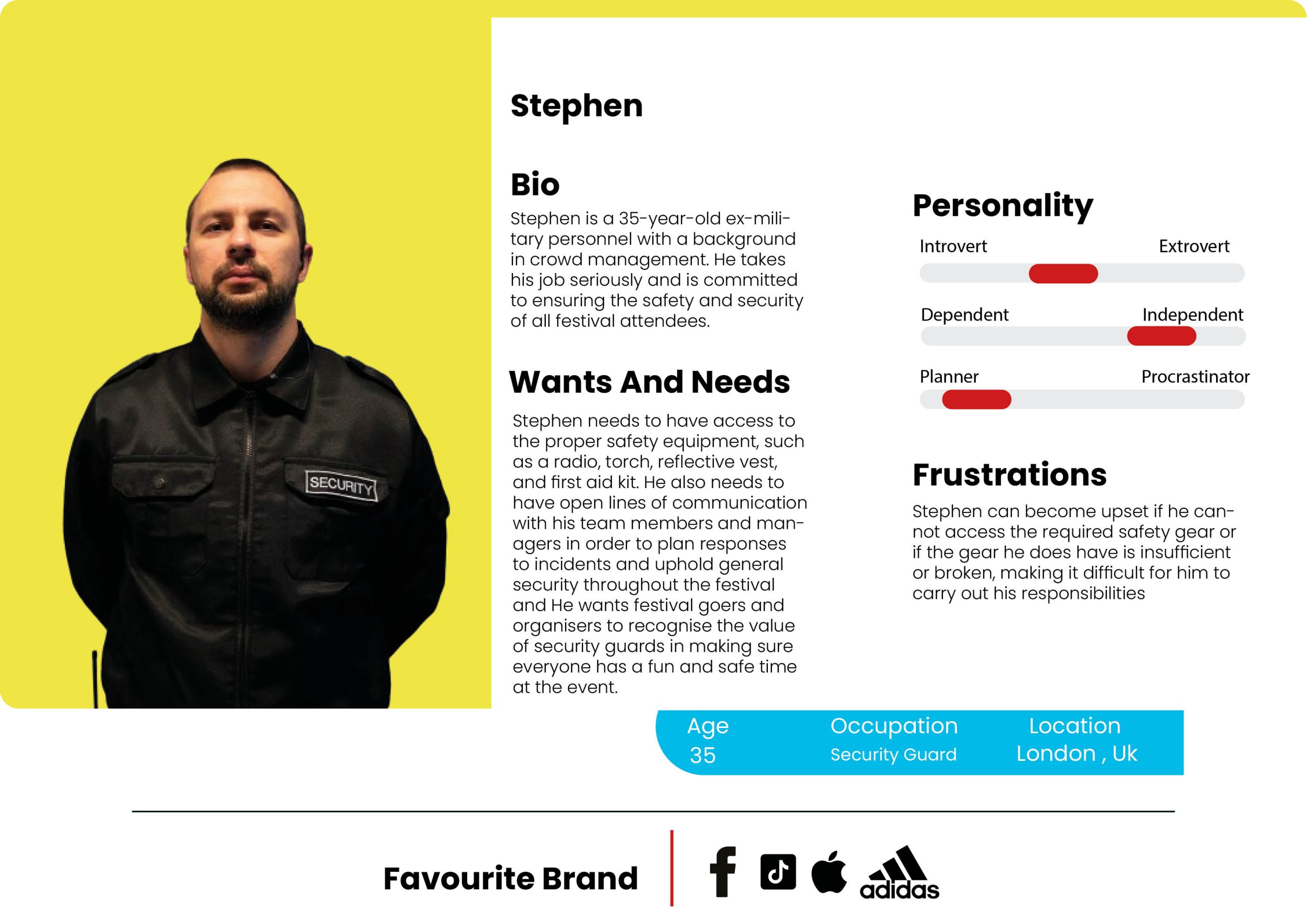
Persona 4 – Stephen, Security Guard
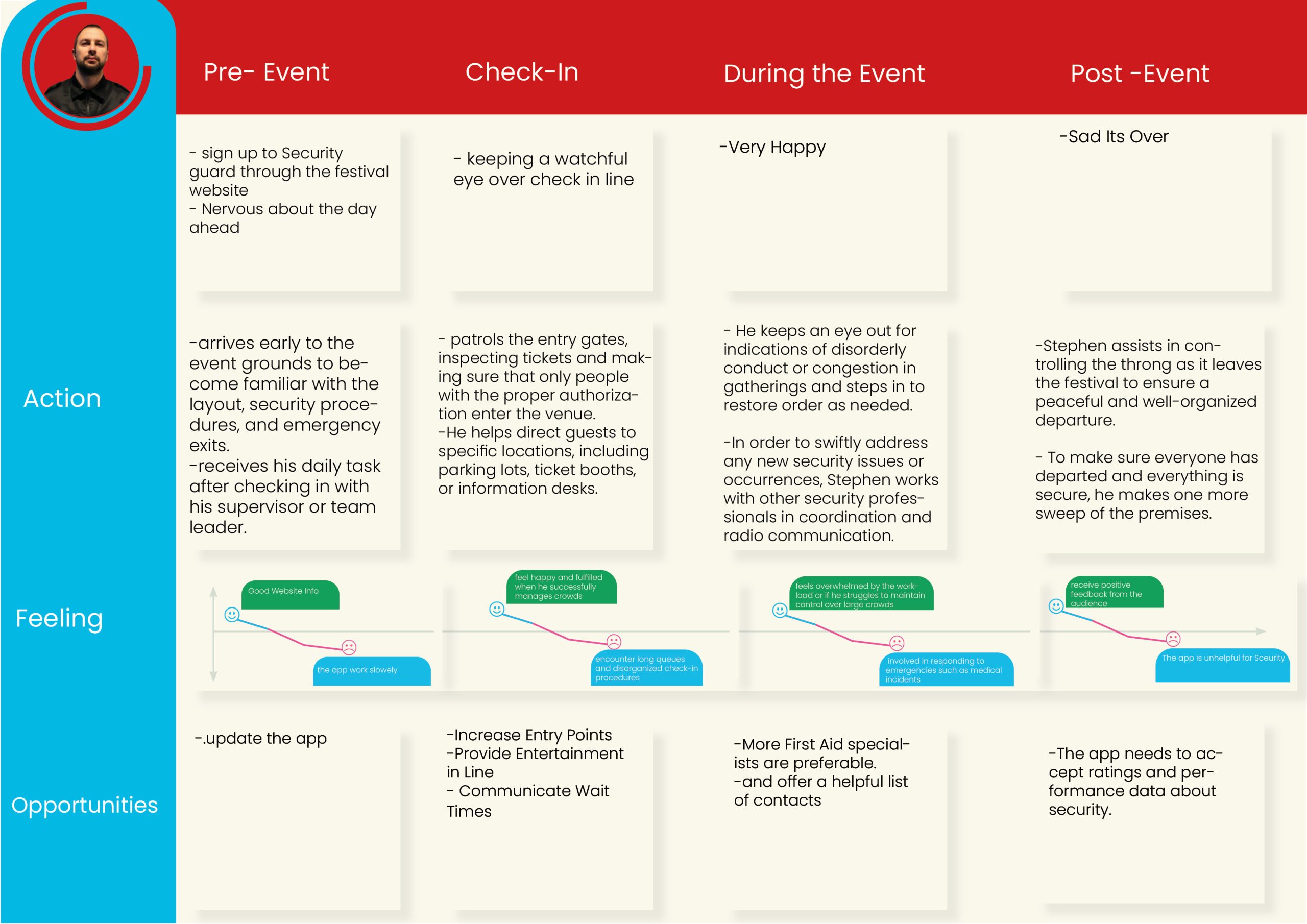
User Journey Map 4 – Stephen, Security
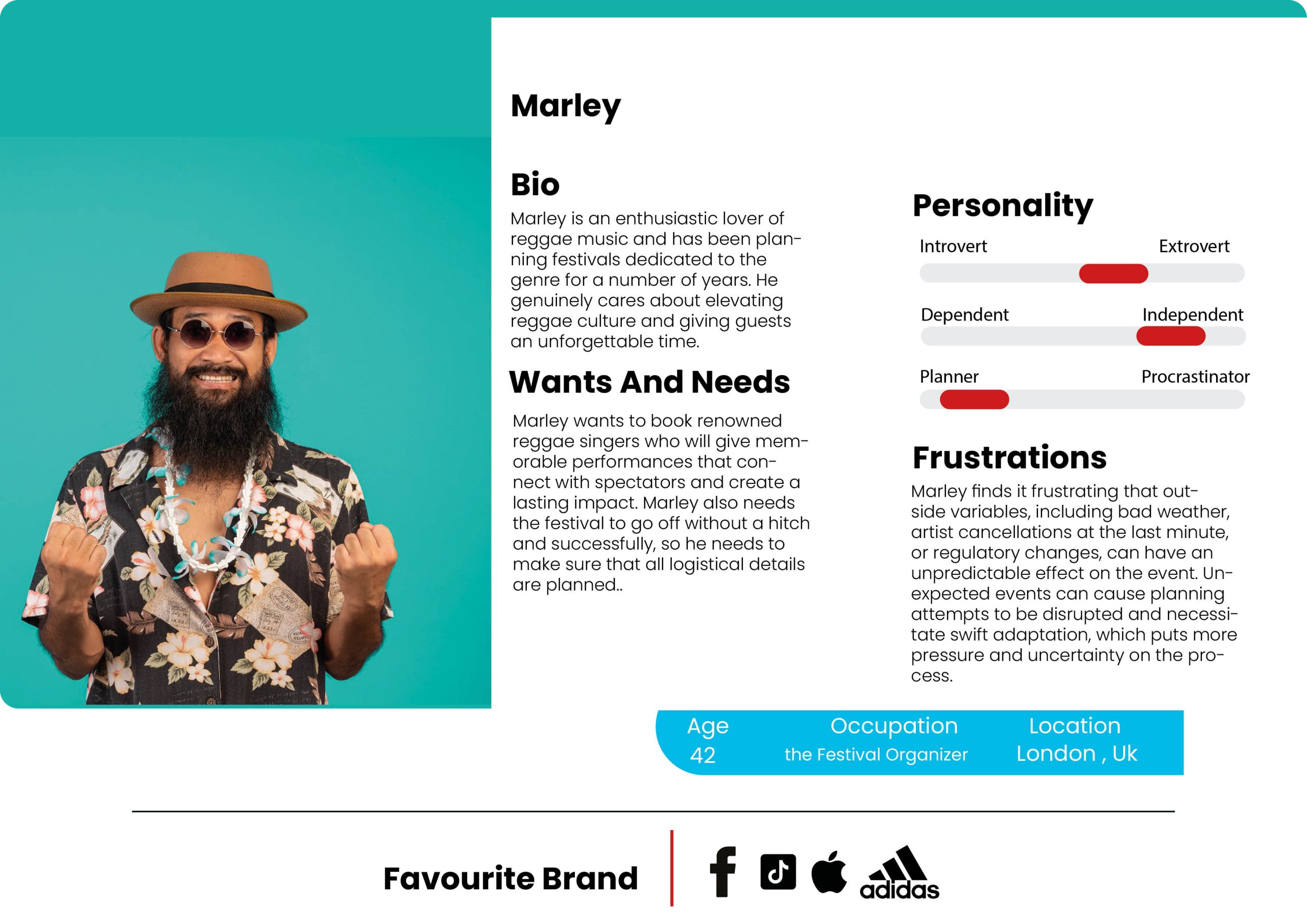
Persona 5 – Marley ,Event Organizer
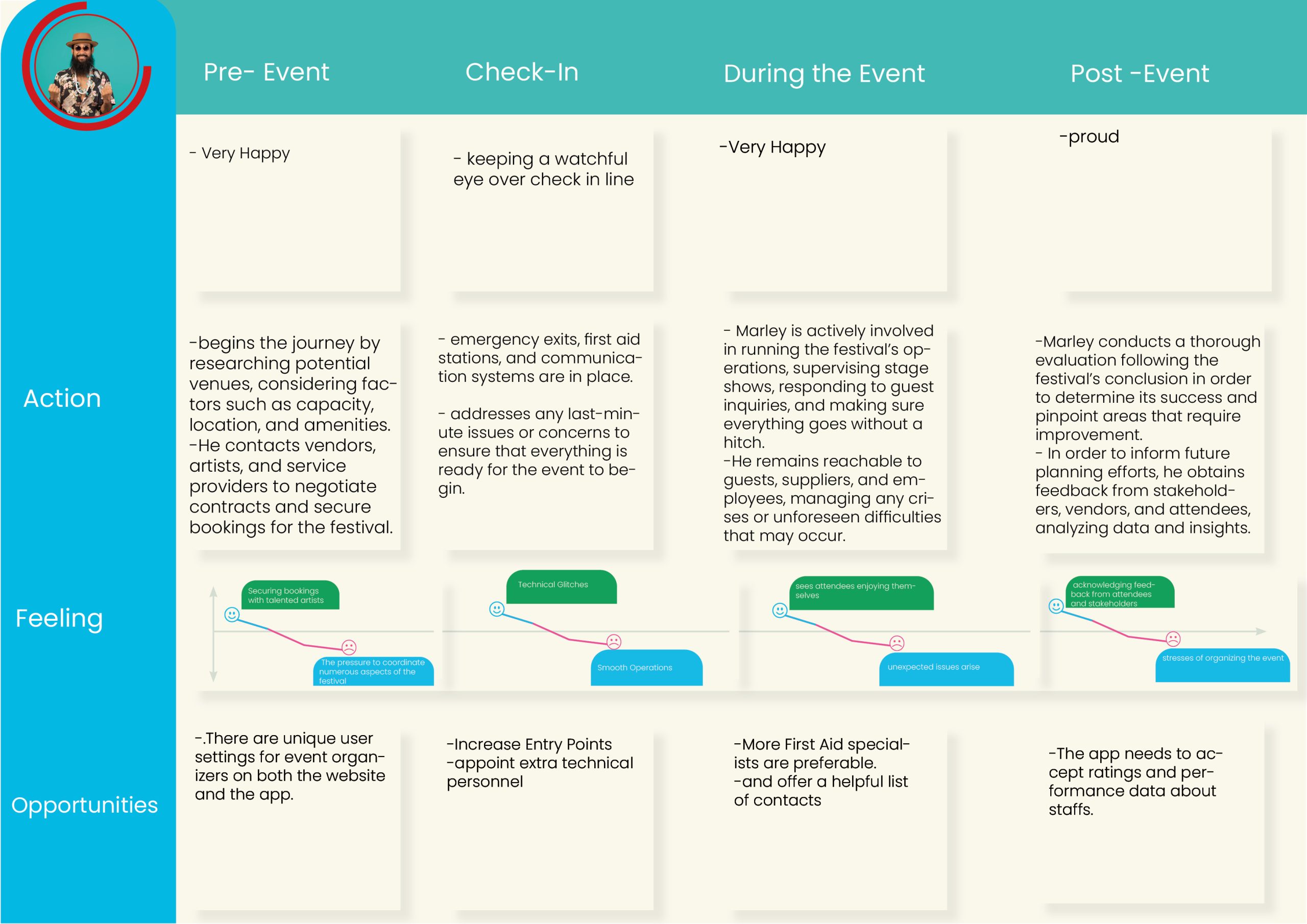
User Journey Map 5 – Marley ,Event Organizer
References
1. Power, C., Freire, A., Petrie, H. and Swallow, D., 2012, May. Guidelines are only half of the story: accessibility problems encountered by blind users on the web. In Proceedings of the SIGCHI conference on human factors in computing systems (pp. 433-442).